Tzen Szen

Archive

About Me

Say Hello

Hello, welcome to my blog! I write about topics that I am interested in reading about.

A Short Note on 2016

A Short Note on 2016

Personal challenges for the year ahead

  • By
  • Tzen Szen
  • on January 9, 2016 11:58am

  • This year, I would like to set a couple of personal challenges to learn new things.

    Last year, I tried many different things; from learning how to build Android apps, attending my first hackathon, and even starting this blog. While I started learning/doing many things, I would like to continue developing those new skills to eventually hone them.

    Often, it is too easy to get distracted. That is why the theme for the challenges this year is mastery. While I don't expect to be a master of what I do right away, I should focus on a few things that I want to learn to become better at.

    They are as follows.

    1. The Rule of 2

    Being a medic doesn't have to mean being trapped in a bubble.

    This personal challenge will be about reading 2 books a month. While there is always a lot going on at medical school, that shouldn't be an excuse to not read more.

    I am sure reading will indirectly help me become better at what I do/want to do through helping me to understand more about how the world works.

    From books about design, other branches of science, business, economics, fiction, there are many books out there that will help me gain a perspective on a variety of topics. If you have any books that you'd like to recommend, I'd appreciate if you left a comment below!

    2. A Year of Code

    Since I started to learn to code last year, I'd like to continue from where I left off.

    My interest in technology has led me to learn how to read and write code. On top of learning how to build cool stuff, learning to code has really improved the way I approach problems.

    There is always much room for improvement. While it is definitely far from easy and does get frustrating at times, that is just part of the learning process.

    The medical calculator app (I know, it's not the most sexiest thing) that I was building last summer requires more fine-tuning but I hope to publish it in the Google Play Store within the next couple of months!

    Here's to an intellectually fulfilling 2016

    Do take note that these personal challenges will be done on top of everything that goes on in medical school; I don't intend to neglect my studies.

    I'd hopefully be able to say that I can provide more value to the people around me at the end of the year compared to the start of 2016.

    Here's to an intellectually fulfilling 2016!

    Yours, Verily

    Yours, Verily

    Alphabet's Life Science division debuts a new name

  • By
  • Tzen Szen
  • on December 18, 2015 1.10pm

  • Meet Verily, the latest division under Alphabet's umbrella.

    The word means "truly" or "certainly". It dates back to the Middle English of the 14th century and does occasionally appear in the King James Bible. However, in terms of common use, it hasn't been used since... well, quite a long time ago.

    Verily is a life sciences company that graduated from Google's moonshot factory, Google[x]. They started out as the life sciences team in Google[x], working on a smart contact lens that detects blood glucose levels in 2012, eventually spinning-off as an independant company.

     photo xnsvoranq5oyapqxfah7_zpsgq6xfe5x.png

    Based on their new website, Verily is focused on "using technology to better understand health, as well as prevent, detect, and manage disease".

    As a medical student fascinated by technology, this resonates with me, hard. It really does excite me.

    Verily's mission involves moving healthcare from reactive to proactive/preventative, from generalised to personalised. They want to make health more about being continuous rather than episodic. And with a diverse, multidisciplinary team, it sure looks like they stand a good chance of doing just that.

    A single discipline isn't going to cure disease

    Verily is led by their CEO, Andy Conrad. Formerly the chief scientific officer of LabCorp, he is a cell biologist and has co-founded the National Genetics Institute, which developed the first cost-effective test to screen for HIV in blood supply.

    His team at Verily is truly a multidisciplinary one. It comprises of engineers, doctors, scientists, and statistics gurus, with a single mission of improving healthcare. To better understand the bigger picture, they even have a philosopher on their team to figure out the "why" of what people do.

    To detect disease earlier, understand it better, and intervene in the course of the disease more precisely, Verily has already started with their long journey. For example, they've started to develop a contact lens with an embedded glucose sensor to detect glucose levels in tears. The Baseline Study is currently ongoing to better recognise what a healthy person is. Recently, they've also filed a patent for a "needle-free blood draw" system.

     photo Screenshot 2015-12-18 at 12.26.44_zpsn68qc159.png

    Health isn't and shouldn't be about the yearly doctor visits. 23andMe (another company that I'm a huge admirer of) CEO, Anne Wojcicki hit the nail on the head when she said, "Health is about what you do every single day”.

    We don't even know what being "healthy" means yet. We think that as long we aren't feeling ill, we are healthy. That sure isn't the case. How many times have doctors found tumours in patients when they weren't actually looking for them?

    The healthcare industry hasn't fully embraced technology as an equal in solving the largest problems we are currently facing. Even if the industry does, more often than not, it takes ages for the tech to reach physicians and patients. And rightly so, for a couple of reasons.

    As an industry that involves human life, the margin of error is incredibly tiny. Should the technology that we use to help patients fail, the consequences are unforgiving. Bureaucracy surrounding the industry as a whole also plays a part with limiting innovation. A lot of the time, we are focused on what we can't do instead of what we can - we find more reasons for saying "no", instead of more reasons for saying "yes".

    We find more reasons for saying "no"

    One fine day in the near future, I hope to look back and chuckle to myself at how we faced the problems that are plaguing healthcare. Verily represents an ideal of hope - that we can have world in which technology and life sciences are in congruence with one another to reveal new truths about health and disease.

    And with a practical and real approach to scientific development, that world verily looks more like reality instead of a dream.

    The State of Virtual Reality (Late 2015)

  • By
  • Tzen Szen
  • on December 17, 2015 10.20am

  • Back when I was a kid, virtual reality (VR) was basically fictional.

    It was tacky, gimmicky even. It was something that you'd file under "nice to have".

    VR came as different forms as seen in sci-fi movies like The Matrix or Tron. Not everyone had the access to games or toys like Battlezone of the View-Master. While considered primitive by today's standards, Battlezone and the old View-Master blew people away due to the immersiveness of their experiences at that time.

    Good VR is here

    Enter 2015, VR is back from a hiatus; from ’90s futurism to one the largest attractions in tech world. It's been about 4 years since Palmer Luckey built the prototype that would eventually become the Oculus Rift in his parents’ garage in 2011 (the coolest things always start out in a garage, don't they?). It's been three and a half years since that prototype was unveiled at E3 by John Carmack, jumpstarting everything.

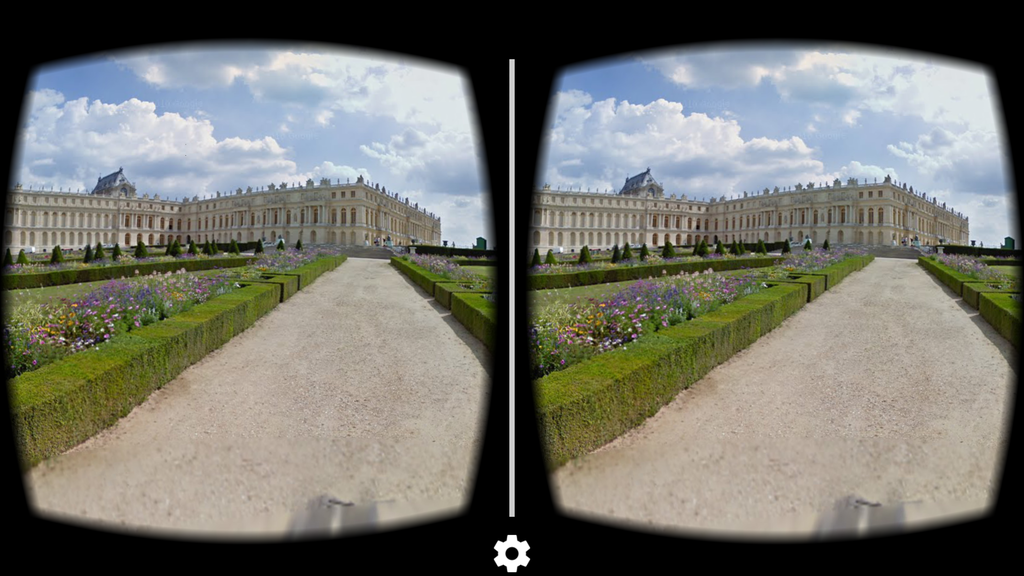
    VR is a platform that stimulates the senses, notably sight, touch, and hearing. Being part of a research project involving the Oculus Rift in September, I was impressed by what I experienced. The programmes that I tried out felt real. The need to reach out to touch the planets and stars that surrounded me was completely natural. Trying out a rollercoaster programme, my head swayed naturally from left to right as the rollercoaster made sharp turns and loops. The slight feeling of nausea also came with the experience.

     photo VR_zpsgrhhge9i.png

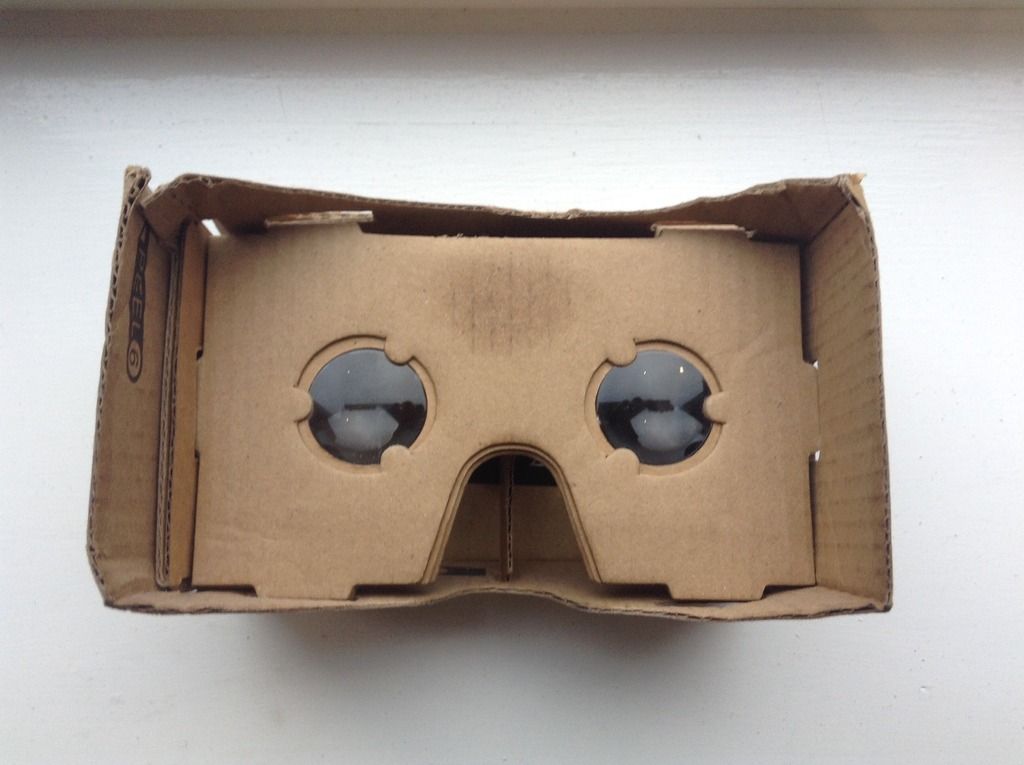
    The Google Cardboard that I tried out impressed me just as much. Essentially just a piece of cardboard with some lenses and a magnet, the experience that I got out of it was astoundingly immersive for something costing the fraction of the price of the Oculus Rift. A combination of decent haptic feedback, visuals, and audio allows Google's take on VR to punch way above its weight.

    VR isn't just a gimmick anymore. It's not something that you will see and go, "That's something nice to have!". It's the real deal.

    That's a reason why the largest names in tech are competing to have a say in the VR market; Facebook, Google, Samsung, Sony, and HTC are lining up to show the rest of the world what VR is capable of.

    Even non-tech companies are jumping on the VR bandwagon. The NY Times have recently released a mobile app for VR, while also sending print subscribers a free Google Cardboard. Mattel, one of the largest toy companies in the world, have partnered with Google and National Geographic to release a new, VR enabled, View-Master for kids.

     photo File_000_zpsyb7jmckr.jpeg

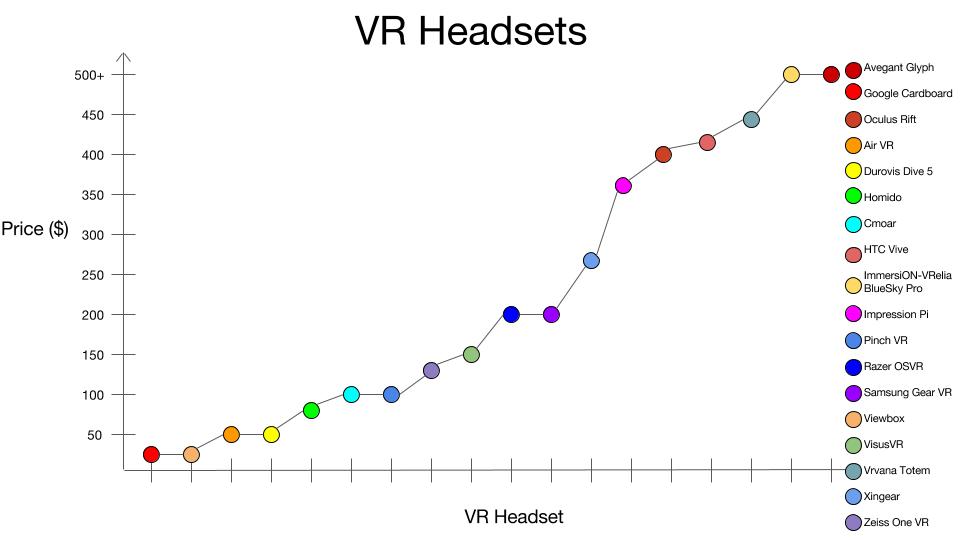
    We are going to be spoilt for choice with the amount of VR headsets currently in market or about to enter the market in early 2016. Have a look at the graph below and you can see that they come in a variety of price points. This is based heavily on whether they are powered by a desktop or by mobile phones.

     photo Data Visualisation part 2_zpsfz7ovqks.png

    The applications of VR are virtually limitless. We've already seen it being used in training pilots and military training. But what about other industries? For example, can we improve surgical training by using a VR headset with haptic feedback? How about better visualising medical imagery using VR for diagnostics and surgical planning? Can children see other parts of the world in just their classroom without having to travel there?

    VR is difficult to explain in words

    It is thrilling to see where the applications of VR will take us. However, one of its largest challenges is to actually tell people how an experience with VR is like. It is notoriously difficult to express in words.

    I can write a 2000 word essay about it and you won't even know what it really feels like. Until you try it out for yourself, it's all just words.

    But yes, for now, good VR is finally here. A question that should be asked is whether it will be here to stay.

    And my answer to that would be: I certainly hope it does.

    5 Important Lessons From My First Hackathon

  • By
  • Tzen Szen
  • on November 26, 2015 10.13am

  • It has been just over a couple of weeks since my first hackathon that I participated in. To put simply, a hackathon is an event where people (programmers, designers, etc.) come together to turn ideas into reality.

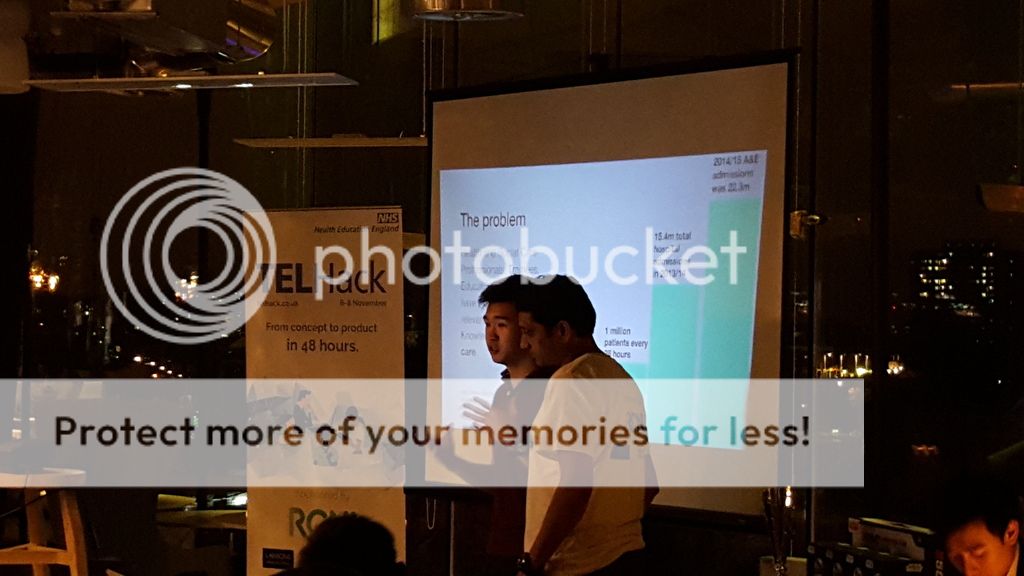
    TELHack, which took place in London from the 6th to 8th of November, is a hackathon aimed at transforming healthcare education. In case you were wondering, the "TEL" in TELHack stands for Technology Enhanced Learning.

     photo TELHack_zpsrozfgi94.png

    Looking back, there was plenty to take away from the hackathon. So, here's 5 of the most important lessons I learnt from my experiences at TELHack.

    1. Default to open.

    The concept of default to open is woven in the DNA of hackathons. Being default to open means rather than starting from a point where you choose what to share, start from a point where you chose what not to share. Hackathons are an environment which simply thrives on collaboration and openness. Having heard of this concept is one thing, but experiencing it first-hand was entirely different and it blew me away.

    Want to know if your idea would be worth working on during a 48-hour period? After sharing my idea about virtual reality (VR) to work on during the weekend, a software developer advised that it'd be wise to consider something else, mostly because there weren't many developers experienced with VR. Not sure what a business model canvas is? Ask the experts who have been involved in numerous startups or have a background in business.

    Speak to the people you are surrounded by and share your opinions and problems with them! What better way to get your questions answered or your problems solved by individuals who have/had similar experiences. A hackathon is a friendly event, so meet as many people as possible, make friends, and learn.

    2. Don't take your ability to learn for granted!

    Speaking of learning, I didn't realise how much one could learn in just 48 hours. My experience in coding was fairly limited and even at TELHack, I didn't write much code. But I was surrounded by people who read and write code for a living. I was able to learn through seeing how they did what they did and doing a little myself. That crash course in Python during TELHack is something that will definitely come in handy.

    Learning about building scalable businesses was another matter that I had to get my hands dirty in. Coming from a background in healthcare, my experience in business was fairly limited. Through support and advice from Alejandro, one of the lead organisers, we managed to get a business model going. I've never learnt so much in one night, by researching about getting the first users, scaling a business, and how to generate money.

    How do companies like Google, Facebook, Uber, Airbnb, or Palantir disrupt an industry? How did they start out in the beginning before their businesses started growing? And lastly, how is our prototype more valuable from anything out there already? Those were some questions that we had to learn to ask and answer in less than 12 hours before our final pitch!

    A large part of my learning came in the form of actually doing it. Most of the time, doing something for the first time will result in failure. So, the best way to learn in this instance is to fail faster and quickly learn from mistakes; adopt the "shoot, ready, aim" mantra.

    3. Money is important.

    The rest of my team found it uncomfortable to discuss about the business-end of things. Again, Alejandro managed to help out in this area by explaining why it's important to have a viable business model by the end of the hackathon.

    Essentially, what he said was, "It's okay to not want to think about making profits. But not thinking about making any money at all is crazy! Why? Because every business, regardless of their size has to earn some money. Not profiting is fine, but you must make enough money to keep going and sustain the business."

    That advice really hit me. I now understand better why money is important. Don't get me wrong, the purpose of doing anything shouldn't be based on making profits. Making profits is a result, a side-effect if you wish. However, not thinking about to sustain a business, even when just starting out, would be madness.

     photo download_zpsv0cvc3p0.jpg

    4. Remember to sell the why!

    We had around 48 hours to come up with a working prototype by the end of TELHack. It was too easy to focus on building the prototype, in my team's case, a clinical knowledge respository. That was the "what".

    Looking back, our prototype functioned well and we clearly communicated its features and how it worked. We even managed to explain how it was different compared to other products already in the market. Stumbling across Simon Sinek's TEDTalk, I finally realised what was lacking.

    We didn't communicate the "why" part of our pitch well enough; it wasn't as inspiring as should be! From that TEDTalk, Mr. Sinek said "If Apple were like everyone else, a marketing message from them might sound like this: We make great computers. They're beautifully designed, simple to use, and user-friendly. Want to buy one?". That sounds incredibly "meh", doesn't it?

    Our final pitch at TELHack was decent but there is always room for improvement. In the future, I'd personally would like to use a better approach and explicitly highlight why a prototype was built for in the first place.

    5. Enjoy and have fun.

    Sure, most of us at TELHack didn't get much sleep during the hackathon. Yes, it was also stressful and daunting to come up with a working prototype by the end of it all. But at the end of TELHack, I can tell you there wasn't a single person in the room who didn't have a huge smile on their face. From the participants to mentors and organisers, everyone enjoyed themselves and had a great time.

    I took part in Python crash course and tried some yoga. I met and exchanged ideas with lots of other healthcare professionals, mentors, software developers, and designers. That was all on top of making a difference in healthcare education.

    Working on cool things that matter is highly addictive. Hours and hours flew by when I was preparing a business model, writing code, and helping out my team whenever I could. Hackathons are designed to gather like-minded individuals to solve large problems. It's a little like trying to assemble the Avengers.

    At the end of the day, nothing is worth doing if you aren't having fun. Also, time spent doing something you enjoy, is definitely not time wasted.
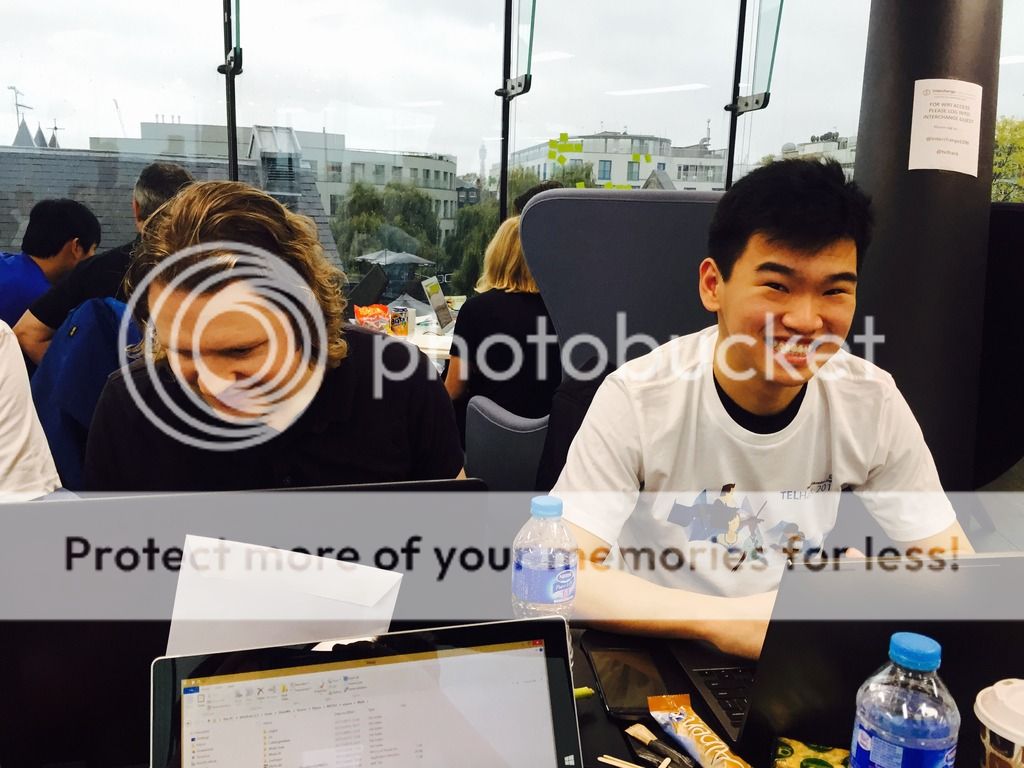
     photo download_zpsv0cvc3p0.jpg

    At the start of TELHack, we said "let's do this!" and at the end, we did it. From concept to prototype in 48 hours, my first hackathon was definitely one to remember!
    Explained: Superman

    Explained: Superman

    Humanity, reflected

  • By
  • Tzen Szen
  • on October 30, 2015 12.10pm

  • The Man of Steel, The Man of Tomorrow, The Last Son of Krypton, going by the alias of Clark Kent/Kal-El, is known to many all around the world as Superman. The superhero is a global icon and more importantly, one of the most popular fictional characters around today. Superman first appeared in Action Comics #1 (June 1938) and has since invaded the rest of pop culture from comic books, to video games, movies, and more.

    "Faster than a speeding bullet. More powerful than a locomotive."

    Most of us are familiar with his origin story where he was born on the planet Krypton as Kal-El and was sent by his parents, Jor-El and Lara, to Earth as Krypton was doomed to destruction. On Earth, he grew up in Kansas as Clark Kent after being adopted by Jonathan and Martha Kent.

    He was traditionally described as, "Faster than a speeding bullet. More powerful than a locomotive. Able to leap tall buildings in a single bound... It's Superman!" which ultimately reflects his extraordinary powers. These powers range from super-strength, flight, near invulnerability to non-magical attacks, super-speed, vision powers (including x-ray, heat-emitting, telescopic, infra-red, and microscopic vision), and super-hearing. Based on the recent Man of Steel movie, these powers were a result of his cells being drunk in the radiation of our yellow Sun, strengthening his muscles, skin, and senses and also due to Earth's gravity is being weaker than Krypton's was, with our atmosphere more nourishing.

     photo man-of-steel-flying-wallpaper-HD1_zpsz5sphru1.jpg

    Speaking to others about Superman or even going through the comments section of YouTube videos, I find the adjectives describing him most notably include "boring" and "overpowered". While it is understandable to see where they are coming from, Superman is miles away from being a boring or overpowered character.

    The reason for me stating so begins with that huge, iconic, "S" shield on his chest. It initially had only one meaning, the "S" for Superman. In recent times however, the "S" stands for the coat of arms of the House of El and more significantly, the Kryptonian symbol of hope. True enough, Superman is the ultimate embodiment of hope in the comic books.

    It's easy to just paint a picture of him as a big guy, throwing massive punches around all the time. But let's not forget about the Flash, who moves faster than Superman or even Batman (who is still awesome), who goes toe to toe with other enemies usually stronger than he is and still comes on top. Despite his many powers, Superman is a totally relatable character. The themes around his story usually involve themes like isolation, loneliness, restraint, and of course, hope.

    Let's break Superman's story down and put it into context. We have this superpowered alien, the last of his species, sent to a foreign planet. No one trusts his intentions; he's a potential threat to everyone, it's hard to trust him. At the pinnacle of his powers, he can literally move planets and easily bring humanity to its knees.

    However, he fights for everyone because he is, in his unique way, a fictional character that represents us. Deep down, you know he is the embodiment of the good in all of us due to his strong moral code instilled in him by his adopted parents, the Kents. What does he do when he's not saving the world? He tries to live a normal life as Clark Kent by working at the Daily Planet as a journalist in the fictional city of Metropolis. He shares the development of his sense of right and wrong with the rest of us. As he grows up, Clark is faced with scenarios that allow him to examine and build his moral compass.

    What does he do when he's not saving the world?

    His struggles are real; how does he exert control over himself with the possession of all those amazing powers and what happens when raw emotions like sadness or anger take over? The Injustice: Gods Among Us storyline explores just that and we see Superman behaving like a god after the murder of Lois Lane and his unborn child.

    In Man of Steel, we see Superman making difficult decisions. Should he save his father from a ravaging tornado and reveal himself to the world when it's not ready or should he listen to father but watch him die? Should he act as judge, jury, and executioner by killing General Zod to save his adoptive home or should he not kill the last of his own species? This brought him to question whether humanity was worth saving and protecting. By murdering Zod, he knows that he is now truly alone.

    If The Last Son of Krypton has anything to teach us about ourselves, it's that it's definitely not easy to be virtuous and honourable. Superman is many things but being a dull character isn't one of them. But rather, he makes one hell of a character for me to continue reading about.