Tzen Szen

Archive

About Me

Say Hello

Hello, welcome to my blog! I write about topics that I am interested in reading about.

Doctors Who?

Doctors Who?

Notes on a profession that is bringing more questions than answers

  • By
  • Tzen Szen
  • on March 6, 2016 9.50pm

  • I was in London about three weeks back, to speak at conference jointly organised by Malaysian Medics International UK and the Singapore Medical Society of the UK. They are two organisations that represent Malaysian and Singaporean medical students respectively, in the UK.

    On the day of the conference, I got to the tube station at Algate East to get to the venue of the conference, UCL. I was due to arrive perfectly on time until I learnt that the station was closed for maintenance. Fortunately, I managed to get a ride from an Uber taxi to get to my destination (thanks Aunty Wei!). As I got into the taxi, the driver introduced himself and began asking the usual series of questions, including: "Why are you headed to this university?", "What are you studying at uni?", and "Where did you come from?".

    It was after answering his initial questions that things started to get interesting. After learning that I am a medical student, he probed further. He asked questions about whether I'd like to stay on in the UK after medical school to continue training and highlighted the junior doctor contract fiasco.

    That conversation I had is what led to this blog post, where I'd like to ask and discuss 2 further questions about the situation as a whole.

     photo Junior-Doctors-Strike_zpsm2cwlfya.jpg

    1. What sort of value do healthcare professionals provide to society?

    Taking care of the ill, preventing deaths of patients, and prolonging their lives should be considered valuable to any member of society. It's easy to say what healthcare professionals do on the job. From assisting and carrying out surgery to consultations to caring for patients in hospitals and the community, that is only a tip of the iceberg of what they do.

    So, why is it that junior doctors (anyone below the level of consultant or general practitioner) in the UK have to resort to industrial action to make their voices heard about the new contract that works them longer hours for lower wages? It's a no-brainer that they should be treated fairly, isn't it? But that is clearly not the case.

    It does paint a picture that healthcare professionals aren't valued for what they do. That is largely due to the fact that it's difficult to quantify the value of their work.

    It's difficult to quantify the value of their work

    Making a mistake in real-life in this industry doesn't mean your business will lose a client or a sum of money; it usually means that someone's life is going to be affected due to your actions and it could be fatal. Is it possible to put a pricetag on the life of someone? How can we measure the value of the hours that healthcare professionals put into taking care of patients? Well, the answer to the questions above is you can't.

    Thus, healthcare professionals do provide great service to society as a whole. However, it's difficult to quantify the value of their work. We can't quantify the work that healthcare professionals do monetarily easily when compared to professionals in other industries.
     photo Silver-Money-Coins_zps6mbsyldf.jpg

    2. Does making money matter in healthcare?

    Here's a contraian truth (a truth very few people agree with): people say they value the work of doctors, nurses, and other healthcare professionals but they are very hesistant to pay them for services. Ask anyone to pay more taxes to fund a public healthcare system or pay high fees for private healthcare and you'll be met with a response of something like, "But it should be free!".

    Money does matter, but only to a certain extent. There needs to be enough funding to keep a healthcare system running efficiently. However, no one is going to give money for free. It'll be given to you only if you can provide value by either providing a great service or generating more money for the people giving you money in the first place.

    As junior doctors and other healthcare professionals are providing good services to the public, they do deserve to be paid fairly. The working hours can be long, some patients are difficult to deal with to say the very least, and there is a shortage of staff a lot of the time - that is the reality of being a doctor or any other healthcare professional, for that matter. Most people who study medicine don't do it for the money. There are better ways to get rich. But that isn't a good enough reason to not pay junior doctors fairly.

    There's a reason why Google, Facebook, and other large technology companies are never short on attracting great talent. On top being a great place to work at, they truly value their employees and what employees can bring to the company.

    Healthcare professionals are the best people to do what they are supposed to do. Doctors, nurses, dentists, paramedics, pharmacists, and all the others involved are great at what they do (although being human, are prone to errors sometimes). What we often fail to realise is that the best people are more valuable than you think.

    The greatest and brightest people will leave to other places where they will be appreciated for their work. It is no surprise that many junior doctors in the UK are thinking about moving abroad in hopes of being paid fairer with better working hours.

    The best people are more valuable than you think

    It can be disheartening to hear about the news that junior doctors are going on strike, leaving the country, or leaving the profession altogether. At the same time, the uncertainly of the the future can also be worrying. The situation seems dire now but eventually this too, shall pass.

    It is easy to daunted by the challenges that we are facing in healthcare (likewise in other industries), but we need to persist and keep trying to make things better. Mark Twain sums it up best with a quote of his:

    It doesn’t matter what the press says. It doesn’t matter what the politicians or the mobs say. It doesn’t matter if the whole country decides that something wrong is something right. Republics are founded on one principle above all else: The requirement that we stand up for what we believe in, no matter the odds or consequences.

    When the mob and the press and the whole world tell you to move. Your job is to plant yourself like a tree beside the river of truth and tell the whole world: “No, you move.”

    *The views expressed in this post represent me only and not the organisations I represent.
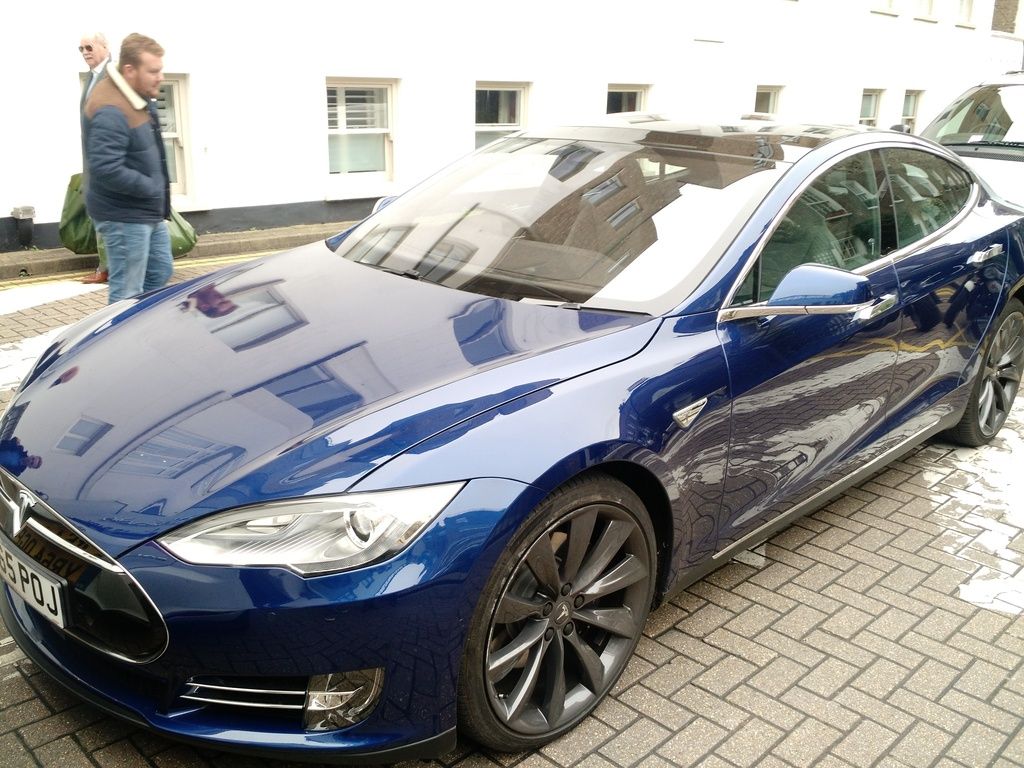
    Impressions: Tesla Model S

    Impressions: Tesla Model S

    40 minutes inside the car that is changing the automobile industry

  • By
  • Tzen Szen
  • on January 30, 2016 3.20pm

  • The Tesla Model S is an epitome of human engineering, an excellent example of the harmony between software and hardware.

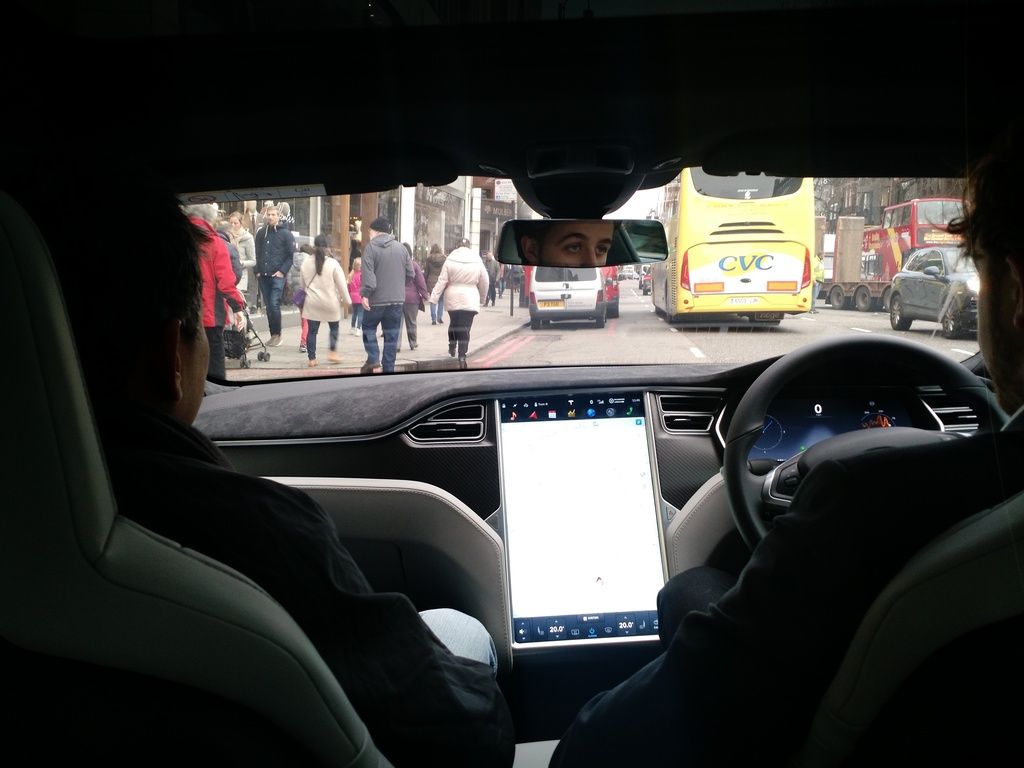
    Late last December, I had the chance to have a ride in a Tesla Model S P85D (85 kWh battery, "D" for dual motor), with my dad at the wheel (you have to be over 25 to test drive it) at Harrods in London.

    Here are a few key things that truly makes this car compete in a league of its own.

    The best 40 minutes that I ever spent in any automobile. Period.

    From a passengers point of view, I've never sat in car that silent and comfortable as the Model S. As my dad zipped around the South Kensington with the guide of the enthuastic Tesla Product Specialist, Tom, I couldn't help but notice how quiet it was in the car.

    With the car being all-electric, it doesn't have the internal combustion roar like other traditional cars. There wasn't even a hum of any machinery, nothing.

    As the car was put through its paces, it handled every turn and bump on the road as smoothly as a hot knife cutting through butter. Being a first timer driving the Model S, my dad had no problems with getting used to the car.

    The Model S is also known for its acceleration and oh man, it doesn't disappoint. Again, being an electric car, the torque in this car is almost instaneous, unlike a regular car where there is lag as you step on the gas pedal to actually accelerating. Going from zero to sixty in around 3 seconds was definitely the highlight of my 40 minutes in the car. Tom telling us to get ready as he was going to floor it was just a formality; you can't be prepared for what is coming.

    Just close your eyes and imagine an airplane accelerating as it is about to take off. Multiply that by 10 fold and that is the closest that I can put the acceleration of the Model S in words.

     photo IMG_20151221_115153_zpsut0s7sa9.jpg

    Other perks of the Model S being all-electric is the amount of extra space you get with it. The lack of an engine in the front combined with just batteries and electric motors powering the car, allows for a lot of storage space in both trunks (front and back). Coupled with the lack of a normal transmission and gearbox, there is more open space that you can't get in a car with gas engine and tank. There is no need for much maintenance with the car except for changing the wiper fluid.

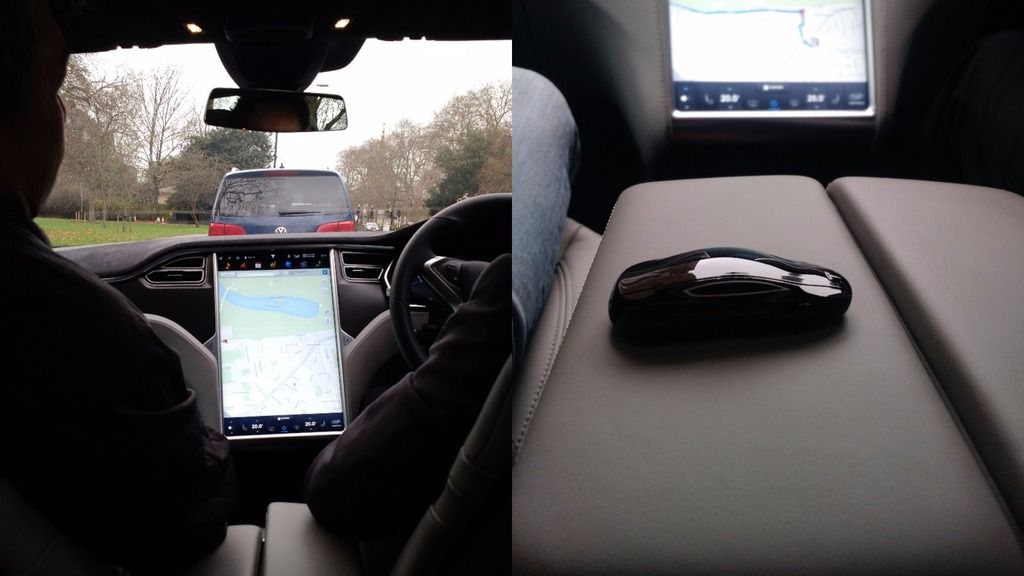
    The 17 inch touchscreen that acts as the center console of the car is a console that car owners everywhere deserve. The screen has enough pixels to allow the driver to control all aspects of the car from the music, doors, locks, lights, navigation, and it also includes a web browser.

    You can swap these on the touchscreen to any configuration. For example, you can have Google Maps navigation and music on top of each or you could have an entire application take up the full screen.

     photo IMG_20151221_114009_zpsazwtkcyk.jpg

    The 3G-connected touchscreen houses a custom built OS by Tesla. This allows the car to receive over-the-air updates directly from Tesla just like how iPhones get updates from Apple or Nexus phones from Google.

    One of the coolest and most significant updates in recent times is the Autopilot update which is another step in the direction of self-driving cars. While we couldn't try this feature out ourselves due to the busy traffic in London, we spoke to Tom about the direction that Tesla is moving in order to have a commercially available fleet of self-driving cars. He's pretty much convinced that Tesla will be the first to get there, just as much as Elon Musk, CEO of Tesla Motors, is; I love how driven they are about that.

    Tesla is a tech company just as much it is a car or energy company

    The underlying software and technology in the Model S is nothing short of impressive. To top it all off, the design and attention to detail of the car itself is phenomenal.

    Model S itself is aesthetically pleasing to the eye. On top of that, it's designed in a well-thought-out manner from the car having one of the lowest drag coefficient of any production car to the door handles popping out automatically as you approach the car or even the carkeys shaped like the Model S itself.

     photo photojoiner_zpsmu87lfby.jpg

    It was those small little bits of attention to detail that impressed me so much about the Model S, sometimes just as much the big bits.

    The journey towards a future of sustainable transport by bringing compelling mass market electric cars to market is well underway. As Tesla gears up to release a more affordable car soon, that future is not looking very far away.

    A Short Note on 2016

    A Short Note on 2016

    Personal challenges for the year ahead

  • By
  • Tzen Szen
  • on January 9, 2016 11:58am

  • This year, I would like to set a couple of personal challenges to learn new things.

    Last year, I tried many different things; from learning how to build Android apps, attending my first hackathon, and even starting this blog. While I started learning/doing many things, I would like to continue developing those new skills to eventually hone them.

    Often, it is too easy to get distracted. That is why the theme for the challenges this year is mastery. While I don't expect to be a master of what I do right away, I should focus on a few things that I want to learn to become better at.

    They are as follows.

    1. The Rule of 2

    Being a medic doesn't have to mean being trapped in a bubble.

    This personal challenge will be about reading 2 books a month. While there is always a lot going on at medical school, that shouldn't be an excuse to not read more.

    I am sure reading will indirectly help me become better at what I do/want to do through helping me to understand more about how the world works.

    From books about design, other branches of science, business, economics, fiction, there are many books out there that will help me gain a perspective on a variety of topics. If you have any books that you'd like to recommend, I'd appreciate if you left a comment below!

    2. A Year of Code

    Since I started to learn to code last year, I'd like to continue from where I left off.

    My interest in technology has led me to learn how to read and write code. On top of learning how to build cool stuff, learning to code has really improved the way I approach problems.

    There is always much room for improvement. While it is definitely far from easy and does get frustrating at times, that is just part of the learning process.

    The medical calculator app (I know, it's not the most sexiest thing) that I was building last summer requires more fine-tuning but I hope to publish it in the Google Play Store within the next couple of months!

    Here's to an intellectually fulfilling 2016

    Do take note that these personal challenges will be done on top of everything that goes on in medical school; I don't intend to neglect my studies.

    I'd hopefully be able to say that I can provide more value to the people around me at the end of the year compared to the start of 2016.

    Here's to an intellectually fulfilling 2016!

    Yours, Verily

    Yours, Verily

    Alphabet's Life Science division debuts a new name

  • By
  • Tzen Szen
  • on December 18, 2015 1.10pm

  • Meet Verily, the latest division under Alphabet's umbrella.

    The word means "truly" or "certainly". It dates back to the Middle English of the 14th century and does occasionally appear in the King James Bible. However, in terms of common use, it hasn't been used since... well, quite a long time ago.

    Verily is a life sciences company that graduated from Google's moonshot factory, Google[x]. They started out as the life sciences team in Google[x], working on a smart contact lens that detects blood glucose levels in 2012, eventually spinning-off as an independant company.

     photo xnsvoranq5oyapqxfah7_zpsgq6xfe5x.png

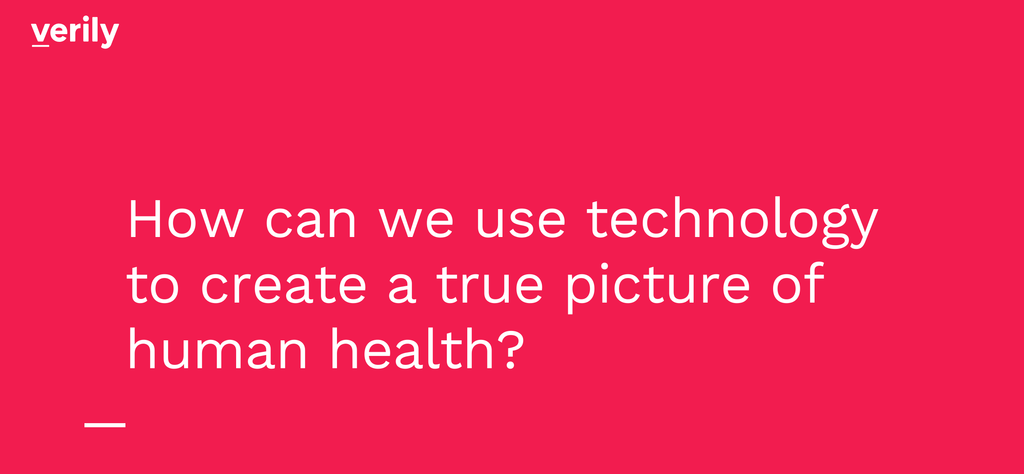
    Based on their new website, Verily is focused on "using technology to better understand health, as well as prevent, detect, and manage disease".

    As a medical student fascinated by technology, this resonates with me, hard. It really does excite me.

    Verily's mission involves moving healthcare from reactive to proactive/preventative, from generalised to personalised. They want to make health more about being continuous rather than episodic. And with a diverse, multidisciplinary team, it sure looks like they stand a good chance of doing just that.

    A single discipline isn't going to cure disease

    Verily is led by their CEO, Andy Conrad. Formerly the chief scientific officer of LabCorp, he is a cell biologist and has co-founded the National Genetics Institute, which developed the first cost-effective test to screen for HIV in blood supply.

    His team at Verily is truly a multidisciplinary one. It comprises of engineers, doctors, scientists, and statistics gurus, with a single mission of improving healthcare. To better understand the bigger picture, they even have a philosopher on their team to figure out the "why" of what people do.

    To detect disease earlier, understand it better, and intervene in the course of the disease more precisely, Verily has already started with their long journey. For example, they've started to develop a contact lens with an embedded glucose sensor to detect glucose levels in tears. The Baseline Study is currently ongoing to better recognise what a healthy person is. Recently, they've also filed a patent for a "needle-free blood draw" system.

     photo Screenshot 2015-12-18 at 12.26.44_zpsn68qc159.png

    Health isn't and shouldn't be about the yearly doctor visits. 23andMe (another company that I'm a huge admirer of) CEO, Anne Wojcicki hit the nail on the head when she said, "Health is about what you do every single day”.

    We don't even know what being "healthy" means yet. We think that as long we aren't feeling ill, we are healthy. That sure isn't the case. How many times have doctors found tumours in patients when they weren't actually looking for them?

    The healthcare industry hasn't fully embraced technology as an equal in solving the largest problems we are currently facing. Even if the industry does, more often than not, it takes ages for the tech to reach physicians and patients. And rightly so, for a couple of reasons.

    As an industry that involves human life, the margin of error is incredibly tiny. Should the technology that we use to help patients fail, the consequences are unforgiving. Bureaucracy surrounding the industry as a whole also plays a part with limiting innovation. A lot of the time, we are focused on what we can't do instead of what we can - we find more reasons for saying "no", instead of more reasons for saying "yes".

    We find more reasons for saying "no"

    One fine day in the near future, I hope to look back and chuckle to myself at how we faced the problems that are plaguing healthcare. Verily represents an ideal of hope - that we can have world in which technology and life sciences are in congruence with one another to reveal new truths about health and disease.

    And with a practical and real approach to scientific development, that world verily looks more like reality instead of a dream.

    The State of Virtual Reality (Late 2015)

  • By
  • Tzen Szen
  • on December 17, 2015 10.20am

  • Back when I was a kid, virtual reality (VR) was basically fictional.

    It was tacky, gimmicky even. It was something that you'd file under "nice to have".

    VR came as different forms as seen in sci-fi movies like The Matrix or Tron. Not everyone had the access to games or toys like Battlezone of the View-Master. While considered primitive by today's standards, Battlezone and the old View-Master blew people away due to the immersiveness of their experiences at that time.

    Good VR is here

    Enter 2015, VR is back from a hiatus; from ’90s futurism to one the largest attractions in tech world. It's been about 4 years since Palmer Luckey built the prototype that would eventually become the Oculus Rift in his parents’ garage in 2011 (the coolest things always start out in a garage, don't they?). It's been three and a half years since that prototype was unveiled at E3 by John Carmack, jumpstarting everything.

    VR is a platform that stimulates the senses, notably sight, touch, and hearing. Being part of a research project involving the Oculus Rift in September, I was impressed by what I experienced. The programmes that I tried out felt real. The need to reach out to touch the planets and stars that surrounded me was completely natural. Trying out a rollercoaster programme, my head swayed naturally from left to right as the rollercoaster made sharp turns and loops. The slight feeling of nausea also came with the experience.

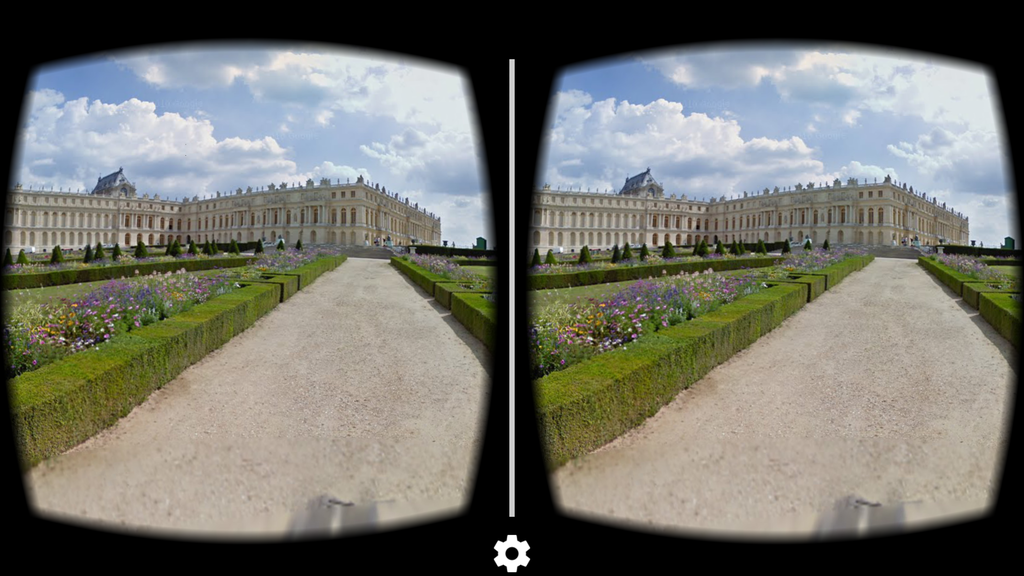
     photo VR_zpsgrhhge9i.png

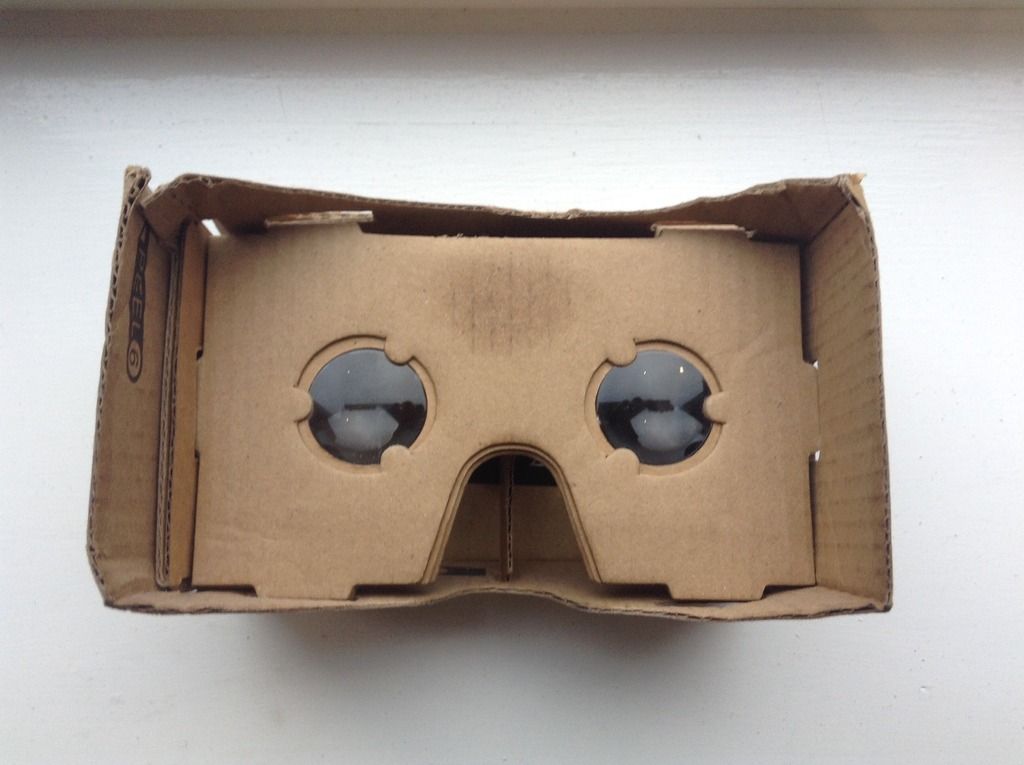
    The Google Cardboard that I tried out impressed me just as much. Essentially just a piece of cardboard with some lenses and a magnet, the experience that I got out of it was astoundingly immersive for something costing the fraction of the price of the Oculus Rift. A combination of decent haptic feedback, visuals, and audio allows Google's take on VR to punch way above its weight.

    VR isn't just a gimmick anymore. It's not something that you will see and go, "That's something nice to have!". It's the real deal.

    That's a reason why the largest names in tech are competing to have a say in the VR market; Facebook, Google, Samsung, Sony, and HTC are lining up to show the rest of the world what VR is capable of.

    Even non-tech companies are jumping on the VR bandwagon. The NY Times have recently released a mobile app for VR, while also sending print subscribers a free Google Cardboard. Mattel, one of the largest toy companies in the world, have partnered with Google and National Geographic to release a new, VR enabled, View-Master for kids.

     photo File_000_zpsyb7jmckr.jpeg

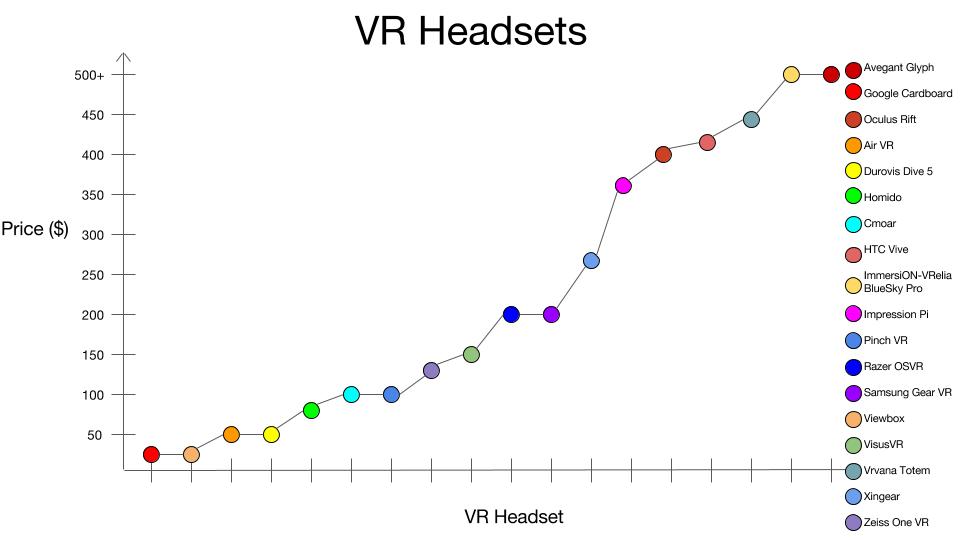
    We are going to be spoilt for choice with the amount of VR headsets currently in market or about to enter the market in early 2016. Have a look at the graph below and you can see that they come in a variety of price points. This is based heavily on whether they are powered by a desktop or by mobile phones.

     photo Data Visualisation part 2_zpsfz7ovqks.png

    The applications of VR are virtually limitless. We've already seen it being used in training pilots and military training. But what about other industries? For example, can we improve surgical training by using a VR headset with haptic feedback? How about better visualising medical imagery using VR for diagnostics and surgical planning? Can children see other parts of the world in just their classroom without having to travel there?

    VR is difficult to explain in words

    It is thrilling to see where the applications of VR will take us. However, one of its largest challenges is to actually tell people how an experience with VR is like. It is notoriously difficult to express in words.

    I can write a 2000 word essay about it and you won't even know what it really feels like. Until you try it out for yourself, it's all just words.

    But yes, for now, good VR is finally here. A question that should be asked is whether it will be here to stay.

    And my answer to that would be: I certainly hope it does.