Tzen Szen

Archive

About Me

Say Hello

Hello, welcome to my blog! I write about topics that I am interested in reading about.

Explained: Superman

Explained: Superman

Humanity, reflected

  • By
  • Tzen Szen
  • on October 30, 2015 12.10pm

  • The Man of Steel, The Man of Tomorrow, The Last Son of Krypton, going by the alias of Clark Kent/Kal-El, is known to many all around the world as Superman. The superhero is a global icon and more importantly, one of the most popular fictional characters around today. Superman first appeared in Action Comics #1 (June 1938) and has since invaded the rest of pop culture from comic books, to video games, movies, and more.

    "Faster than a speeding bullet. More powerful than a locomotive."

    Most of us are familiar with his origin story where he was born on the planet Krypton as Kal-El and was sent by his parents, Jor-El and Lara, to Earth as Krypton was doomed to destruction. On Earth, he grew up in Kansas as Clark Kent after being adopted by Jonathan and Martha Kent.

    He was traditionally described as, "Faster than a speeding bullet. More powerful than a locomotive. Able to leap tall buildings in a single bound... It's Superman!" which ultimately reflects his extraordinary powers. These powers range from super-strength, flight, near invulnerability to non-magical attacks, super-speed, vision powers (including x-ray, heat-emitting, telescopic, infra-red, and microscopic vision), and super-hearing. Based on the recent Man of Steel movie, these powers were a result of his cells being drunk in the radiation of our yellow Sun, strengthening his muscles, skin, and senses and also due to Earth's gravity is being weaker than Krypton's was, with our atmosphere more nourishing.

     photo man-of-steel-flying-wallpaper-HD1_zpsz5sphru1.jpg

    Speaking to others about Superman or even going through the comments section of YouTube videos, I find the adjectives describing him most notably include "boring" and "overpowered". While it is understandable to see where they are coming from, Superman is miles away from being a boring or overpowered character.

    The reason for me stating so begins with that huge, iconic, "S" shield on his chest. It initially had only one meaning, the "S" for Superman. In recent times however, the "S" stands for the coat of arms of the House of El and more significantly, the Kryptonian symbol of hope. True enough, Superman is the ultimate embodiment of hope in the comic books.

    It's easy to just paint a picture of him as a big guy, throwing massive punches around all the time. But let's not forget about the Flash, who moves faster than Superman or even Batman (who is still awesome), who goes toe to toe with other enemies usually stronger than he is and still comes on top. Despite his many powers, Superman is a totally relatable character. The themes around his story usually involve themes like isolation, loneliness, restraint, and of course, hope.

    Let's break Superman's story down and put it into context. We have this superpowered alien, the last of his species, sent to a foreign planet. No one trusts his intentions; he's a potential threat to everyone, it's hard to trust him. At the pinnacle of his powers, he can literally move planets and easily bring humanity to its knees.

    However, he fights for everyone because he is, in his unique way, a fictional character that represents us. Deep down, you know he is the embodiment of the good in all of us due to his strong moral code instilled in him by his adopted parents, the Kents. What does he do when he's not saving the world? He tries to live a normal life as Clark Kent by working at the Daily Planet as a journalist in the fictional city of Metropolis. He shares the development of his sense of right and wrong with the rest of us. As he grows up, Clark is faced with scenarios that allow him to examine and build his moral compass.

    What does he do when he's not saving the world?

    His struggles are real; how does he exert control over himself with the possession of all those amazing powers and what happens when raw emotions like sadness or anger take over? The Injustice: Gods Among Us storyline explores just that and we see Superman behaving like a god after the murder of Lois Lane and his unborn child.

    In Man of Steel, we see Superman making difficult decisions. Should he save his father from a ravaging tornado and reveal himself to the world when it's not ready or should he listen to father but watch him die? Should he act as judge, jury, and executioner by killing General Zod to save his adoptive home or should he not kill the last of his own species? This brought him to question whether humanity was worth saving and protecting. By murdering Zod, he knows that he is now truly alone.

    If The Last Son of Krypton has anything to teach us about ourselves, it's that it's definitely not easy to be virtuous and honourable. Superman is many things but being a dull character isn't one of them. But rather, he makes one hell of a character for me to continue reading about.


    The Importance of Culture

    The Importance of Culture

    Making work rock or at least suck less

  • By
  • Tzen Szen
  • on October 25, 2015 1.25pm

  • We spend a huge part of our lives at work. Since we spend a lot of our time working, it makes sense for a person to like what they do or at least work on something that we're willing to makes sacrifices for. It is surprising how many people in this world don't actually like what they do for a living. A huge part of this dislike can be attributed to working/corporate culture.

    Being part of different organisations in these short 20 years of my life, I have experienced different working cultures, with each of them having their own significant impact on me. A lot of the time, the most important themes that I have noticed about working culture involves the mission of the organisation, the people I'm surrounded by, the values, and practices.

    Mission, people, values, and practices

    If you perform a Google search on the mission statement of any major company that interests you, you'll probably come up with some interesting results. You might find some really simple ones like the ones found here:

  • Google - To organise the world’s information and make it universally accessible and useful.
  • Alzheimer’s Association - To eliminate Alzheimer's disease through the advancement of research; to provide and enhance care and support for all affected; and to reduce the risk of dementia through the promotion of brain health.
  • SpaceX - To revolutionize space technology, with the ultimate goal of enabling people to live on other planets.
  • It doesn't take much to figure out that people can easily relate to these mission statements because they are simple, concise, and ultimately, good. It's undeniable that organising the world's information, eliminating Alzheimer's disease, or getting humans to colonise Mars one day are good things. These mission statements are also great because of what they don't mention. Terms like customers, shareholders, and profits are nowhere to be found unlike, for example with Procter & Gamble. Employees associated with the organisations then have a meaning to their work as their missions are less about profits or business goals but more about having a positive impact on the world. Deep down, nobody wants to just be another cog in a machine.

    Values are at the core of any culture. While a mission expresses a company’s purpose, values offer a set of guidelines on the conduct and ethos required in order to achieve that mission. Yes, having a set of values and practising them matter. It matters especially when you are trying to accomplish your mission. Is it really success when you get something done but doing it misguidedly?

    Putting values into practice to accomplish a mission doesn't have to mean having free gourmet food, crazy offices, or other various perks. It starts with the most basic things like sharing as much information with everyone or giving people a platform to channel their opinions. Being transparent and open is a large part of companies like Facebook and SpaceX. It's why even Mark Zuckerberg and Elon Musk have regular desks and cubicles respectively like other employees. Google encourages transparency through weekly TGIF meetings on Friday with their co-founders, Larry and Sergey, and other various execs where employees can ask them any question on just about anything. They also have the annual “Googlegeist” survey (response rate of 88% or more) to gather feedback from employees to solve the largest problems at the company.

    People are the spine of any organisation or company and having great people surrouding you makes such a huge difference. From product managers to the CEO, the right people in any organisation will definitely make or break it. Take my medical school in Sheffield, in the UK, for example.

    When treating others nicely is the norm, you'll be called out for doing otherwise

    Entering a completely new environment is naturally a very daunting process. But I found it quite amazing how relatively easy it was to adjust to my new environment, which was largely due to being surrounded by the amazing people I now call my friends and colleagues. It's difficult to find distasteful people around (although people like that exist in any large organisation) because it's just unnatural be a horrid person when you are in a nice community. When treating others nicely is the norm, you'll be called out for doing otherwise.

    There are other factors that influence culture at work but these few components can largely influence and shape any company or organisation. While work is still a large part of our lives, it doesn't necessarily have to suck.

    Products to Platforms

    Products to Platforms

    Utilising the power of the people

  • By
  • Tzen Szen
  • on October 12, 2015 10.25am

  • It's always easy to define the term product, which simply means goods or services produced or refined for purchase. The same can't be said for the term platform, however. A quick Google search of the word will show you the definitions of the word which include "a raised level surface on which people or things can stand", "the declared policy of a political party or group", and "a shoe with very thick soles".

    In the world of computing, the word platform is utlised to denote a complete software programming development environment and underlying subsystem. Today, a platform is somewhat different; many industries consider it to be anything that you can build upon. Platforms are a huge part of many of our lives now and a significant amount of enterprises now have a focus on transitioning their products into platforms.

    Some of the amazing platforms I interact with on a frequent basis include the Android operating system (OS), Facebook, Youtube, and Quora (a personal favourite of mine). As long as platforms continue to have a large impact on their millions of users everyday, they are definitely here to stay. In fact, platform-based companies have higher chances of impacting many more users than traditional businesses which produce one or more closely related product or services.

    A win-win-win situation for everyone

    Let's take Google's Android OS as an example. Android now has more than 1 billion 30-day active users and the Google Play Store boasts more than 1.5 million mobile apps. The success of Google's mobile OS is largely due to the fact that is a great platform for mobile app developers and enthusiasts to build great products for the platform, essentially creating a thriving ecosystem. Offering tools such as application programming interfaces (APIs) and software development kits (SDKs) allows developers to build and sell better apps to help solve their users' problems on top of driving inovation for Android - a win-win-win situation for everyone.

     photo Plug In_zpshlkbtos8.jpg

    Platforms are great for users as they are empowered to create content to upload, view, and share with other users around the world. The generation of fantastic content is even more evident on websites like YouTube and Quora. How many of the videos uploaded to YouTube are done individually? The popular video-sharing site has content like reviews, tutorials, and vlogs from a wide range of topics that contain a wealth of information which even sparked permanent careers for some YouTubers.

    On the Q&A website, Quora, users are allowed to follow multiple topics of their interest while also asking questions and providing answers to other questions. It really is refreshing to find how Quora combines various experiences and curiousity to provide cumulative intelligence.

    Consumers buy products, not platforms

    Products are still relevant today as they tend to be at the front-end of what users see. Consumers buy products, not plaforms. In today's world, however, it is increasingly important to think about platforms as a framework for businesses before products. It is this framework that should pave the way for product strategy; what a platform does is to allow multiple products to be built in the same framework.

    Google started off as a search engine all those years ago. Dominating Internet search allowed Google to pave the way for other products such as Gmail, Maps, Chrome, and Android, among others, allowing an expansion of the platform. Amazon started as an online bookstore and then started allowing other third-party vendors to sell their products on their site. At the same time, their retail platform gathered a huge amount of data about how people carry out shopping online on top of making their "one-click" shopping experience available for those third-parties to use as well.

    Facebook is another platform worth mentioning. The website is first and foremost, a social networking site. You can log in to it online to use as a web service or you can download the mobile Facebook app to your device and log in through the app. The Facebook platform is now more than just a social networking site. It sets itself apart not just because of their 1 billion active users, but because of their extensive knowledge of their users' interest. Having the "Like" and "Share" buttons across the web allows them to understand their users beyond the boundaries of Facebook.com. Allowing external parties to plug into this information generates a multiplier effect of sorts by gaining more data about users when they access those external parties.

    Consumers, not governments or enterprises, are driving today's economy more than ever. Building platforms are tough, but the return of investment of strong, consumer-driven platforms is clearly evident with the generation of great content, solving real-world problems, and boosting innovtion at the core of these returns.

    Explained: Google Nexus

    Explained: Google Nexus

    The pure Android experience defined

  • By
  • Tzen Szen
  • on September 29, 2015 1.13pm

  • Since Google's reported $50 million acquisition of Android Inc. back in 2005, the Android operating system has since been invading many of our mobile devices that we use today. With 8 out of 10 smartphones in 2014 shipping Android, 400 original equipment manufacturers (OEMs), 500 carriers, over 4000 devices, and over 1 billion 30-day active users, Android's rise to the top of the smartphone foodchain is nothing short of amazing. Customers are now spoilt for choice when selecting an Android device with the large variety of devices in the market currently available.

    Over 1 billion 30-day active users

    However, with all the different types of Android devices, there is a huge issue for Google to exhibit the best of the Android on top of maintaining their dominance in the smartphone business. The latest Android version would be released months after being officially launched. Users and developers have to wait longer times to experience the new software which could seriously hurt Google in this highly competitive business.

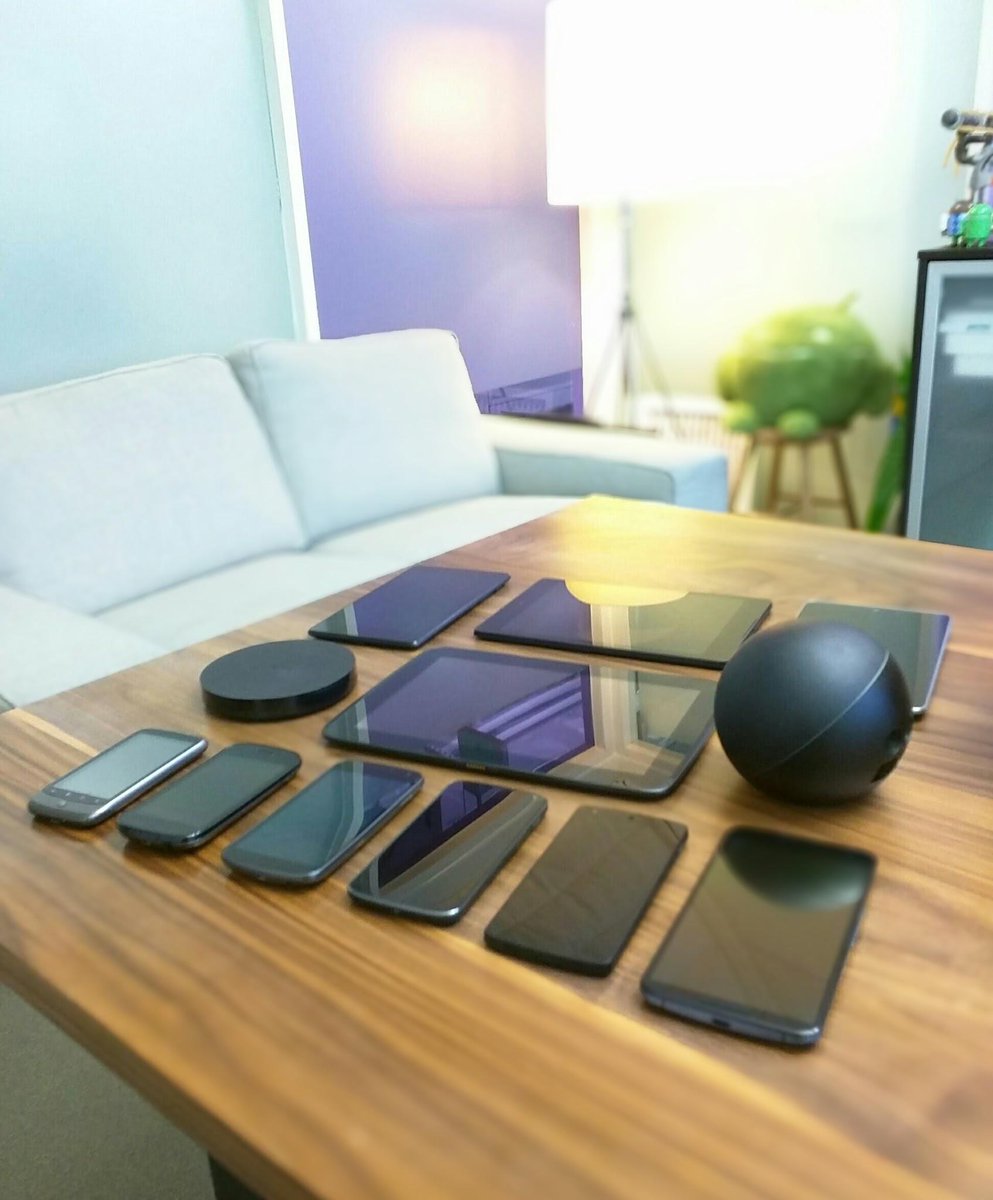
    Google's solution to these problems comes in the form of their Nexus devices; their flagship Android devices. New Nexus devices - be it smartphone, tablet, or digital media player - are typically released around November every year with the latest version of Android.

    Nexus devices are designed, developed, marketed, and supported by Google themselves with some development and manufacturing carried out in partnership with OEMs. OEMs that have been working with Google to manufacture the Nexus devices include HTC, Samsung, LG, Motorola, and Asus.

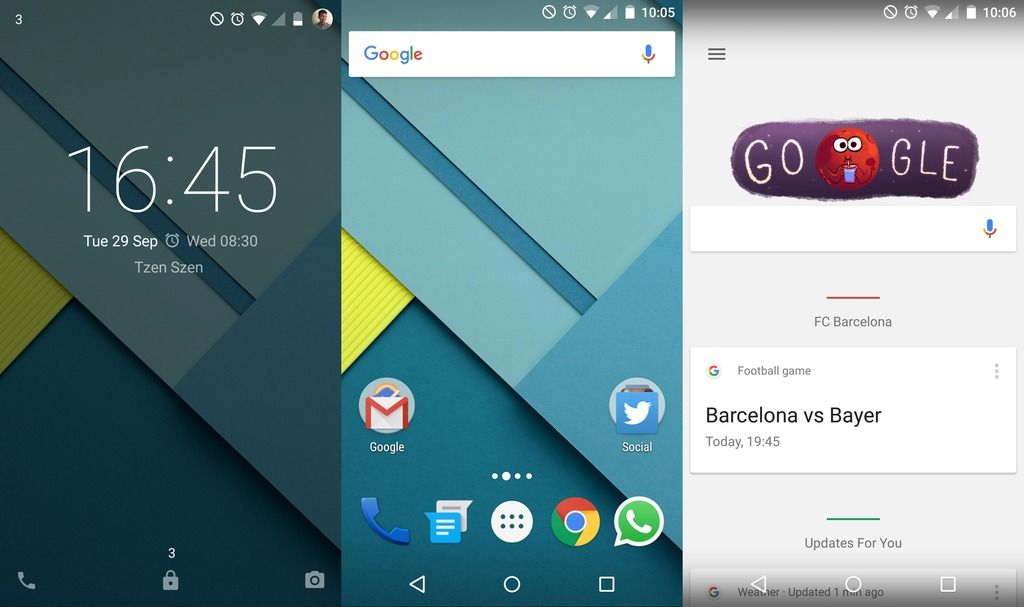
    Many OEMs and carriers opt to have a skinned version of the operating system and additional bloatware on their devices that leaves behind a poor user experience. For example, Samsung introduces a heavily skinned version of Android in their smartphones called TouchWiz while HTC has HTC Sense. Nexus devices are significantly different from devices made by other OEMs as they are free from that bloatware.

    Arguably, these modified versions of Android have built-in features that aim to provide a better experience for their customers and provide an edge against other manufacturers. Unfortunately, more often than not, this only bogs down their devices and hence, the beginning of the perception that most Android devices are unresponsive and slow.

     photo download_zpsv0cvc3p0.jpg

    Having the Nexus line of devices allows Google to showcase the best of their mobile operating system as Nexus devices offer Android in the purest form, also known as stock Android. The Nexus devices will set the tone for other Android device manufacturers; they represent what Google's vision of what Android should look and feel like.

    In exchange, users owning a Nexus device are guaranteed timely Android software updates from Google themselves, usually making them to be one of the first few devices to rock the latest version of Android. Nexus devices are also great for developers seeking to test their apps on the latest version of Android. An unlocked bootloader is the cherry on the top for Android enthusiasts who want to try out custom ROMs.

    Nexus devices are guaranteed timely Android software updates

    You will find that the sales of Nexus smartphones and tablets aren't as spectacular when compared to other manufacturers like Apple or Samsung. Getting your hands as on a Nexus device isn't a walk in the park too as they aren't advertised as much, not sold in every part of the world, and have a limited number of devices at launch. I had to wait for a few months before getting my hands on my old Nexus 4.

    While the Search giant isn't aiming to profit from the sales of these devices, the need for Nexus devices is still apparent and Google needs to continue making them in order to assert their dominance in a world where the first computer someone picks up will probably come in the form of a smartphone. It needs to keep a high level of buzz around Android for the reasons described above while taking a lead in mobile search to keep money coming in.

    "The Spirit of The Game"

    "The Spirit of The Game"

    The foundation of a beautiful sport

  • By
  • Tzen Szen
  • on September 18, 2015 1.30pm

  • Ultimate (as it is commonly known) is a non-contact team sport played by hundreds of thousands around the world in pickup games and by recreational, school, club, professional, and national teams at various age levels and with open, women's, and mixed tournaments. Having a unique set of rules, it is usually played between two teams of seven players on a rectangular pitch with a disc weighing 175 grams.

    Played in more than 80 countries by an estimated 7 million people

    The sport is based off a few, more established sports including, American football, basketball, and soccer. For example, a player cannot travel with the disc (like in basketball), scores a point by getting the disc past a line drawn at either ends of the pitch creating two "endzones" (American football), and the defending team attempts to stop the team with the disc from making progress upfield by marking them (soccer or basketball).

    It was in the fall of 2013 that I was introduced to the fast-growing sport of Ultimate by a group of friends at college. Picking up the basics and playing as many times during the week, although not at a competitive level, has gotten me hooked onto the sport. Just like all sports, Ultimate is full of ups and downs; it can leave you exhilirated, frustrated, and invigorated at different points in a game or sometimes, all at once. Since starting university at Sheffield, I have continued playing as much as I can by going for more formal training sessions and taking part in a couple of tournaments.

     photo 10382028_10204313415168999_6344503488108893685_o_zpsbyceo4p0.jpg

    Ultimate has since come a long way from the time it was introduced by Joel Silver in 1968. Its rapid growth can be marked with the recent recognition of the World Flying Disc Federation (WFDF), the body that governs Ultimate, by the International Olympic Committee (IOC) which allows the sport to be potentially include in future Olympic games.

    Apart from the sport making it mandatory for men and women to be part of the same team, the other thing that sets Ultimate from other sports is its lack of referees. Ultimate relies heavily on "The Spirit of The Game", the spirit of sportsmanship that places the accountability of fair play on the players themselves. That simply means any dispute on the field will be handled by the players without the help of referees in every game of Ultimate ranging from pickups to tournaments.

    All actions are governed by "The Spirit of The Game"

    This honour system works just fine in Ultimate because this is part of the culture of the sport that has been baked into its DNA. Ultimate players highly value "The Spirit of The Game"; when you have a culture of a people treating each other the way they want to treated by others, anyone behaving otherwise will be called out. It just looks horrible when you are the only person being mean to another player. Sure, you do get a person or two who goes out of line once in awhile, but that isn't the norm. I can confidently enter the playing field knowing that I just can just focus on the game itself.

    Ultimate is just as highly competitive as any other sport. Yet, the level of sportsmanship that can be seen in the sport can't be compared to other sports that I've played and it is one of the many reasons that I keep coming back for more. Games are always more fun without any hostility.

    Play hard and fair. Have fun. Go again.

    Update: This post originally stated that major tournaments rely on "The Spirit of The Game". AUDL and MLU are the only 2 pro leagues in the world and these two leagues both uses referees. USAU (U.S.A ultimate) uses observers for all its competition (nationals, regionals and sectionals).

    WFDF recently started using observers for its major tournaments. This means most (if not all) of the major tournaments do not rely solely on "The Spirit of The Game" to govern its games.